Infrastructure Risk Index (IRI)
One risk number.
Every point traceable.
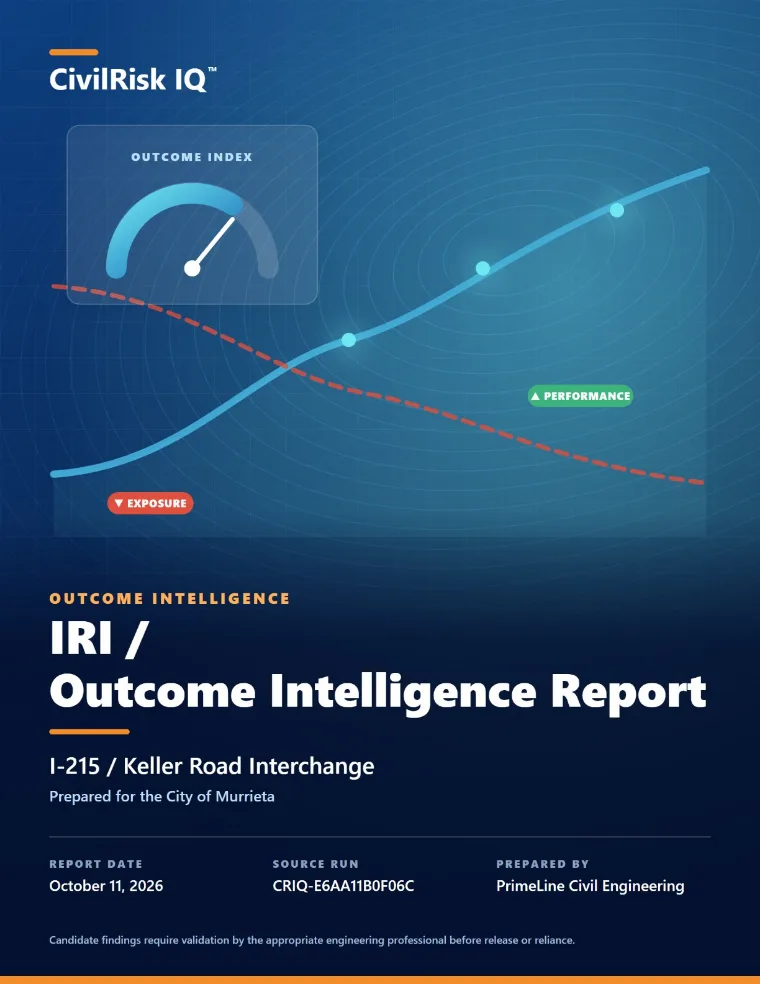
The IRI is an evidence-linked 1–100 project risk measure built from a review's findings. A falling IRI means risk is being managed and reduced as the record becomes clearer. Every point traces back to the findings that moved it.
1–100 scale · Lower is better · Evidence-linked
A signal, not a black box
What moves the index is visible to the people relying on it.
The IRI brings five things from the review record into one shared view, without turning judgment into an unexamined number.
How to read it
Watch the direction, not just the number.
For leaders and project teams, the useful questions are what has changed, what supports that change and what should happen next. The IRI keeps that discussion explicit.
Evidence-linked
Signals connect to source records, findings and documented review context, so anyone can ask "why?" and get an answer.
Direction-aware
The trend between milestones matters more than any single reading: is risk being retired as the record improves?
Decision-oriented
Discussion focuses on mitigation, responsibility and the next decision rather than on a score alone.
What the IRI is not: a pass/fail rating, a safety certification or a substitute for engineering review. It supports the judgment of the people responsible for the project.
Where the IRI appears
Reported where leaders already look.
Tap a cover to see it full size.
Questions about the IRI
Frequently asked questions
What does the IRI measure?
The overall risk signal in a project record, on a 1–100 scale, built from the review’s findings: their evidence, severity and confidence, how they are trending, and whether mitigation is in place.
Is a higher IRI worse?
Yes. A higher IRI means more unresolved, higher-severity risk in the record. A falling IRI means risk is being managed and reduced as the record becomes clearer.
Is the IRI a pass/fail rating?
No. It is a shared signal for discussion. Engineering review and the people responsible for the project still decide what the findings mean and what to do about them.
Where does the IRI appear?
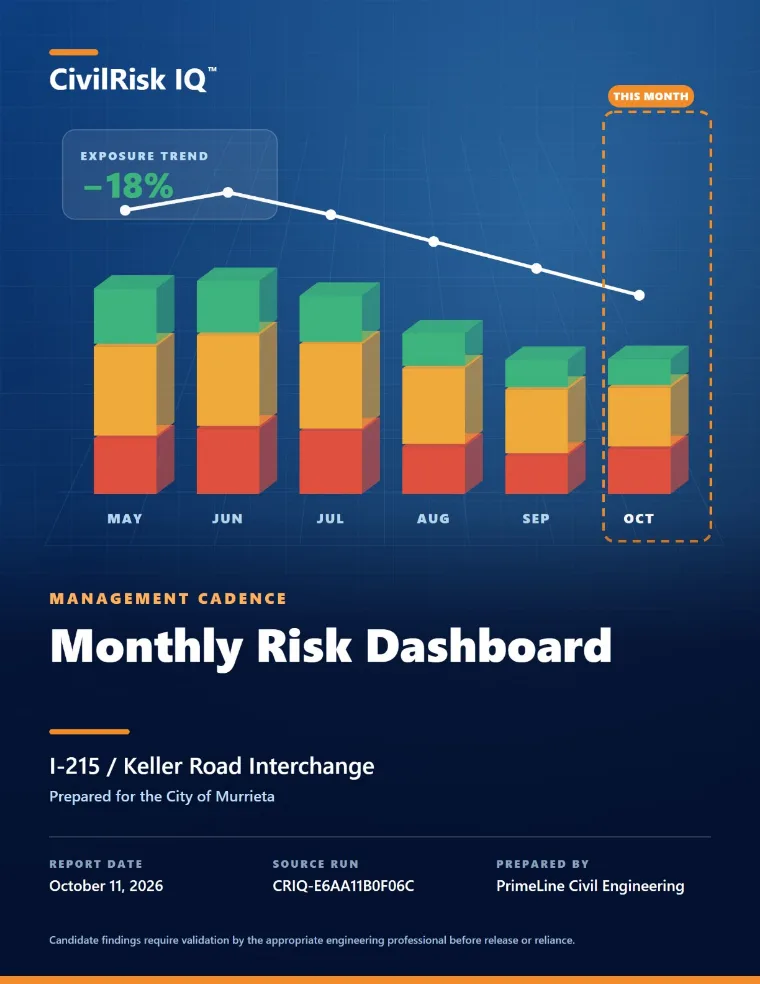
In the IRI / Outcome Intelligence Report and alongside the Monthly Risk Dashboard, so leaders can follow the trend between milestones.
A clearer risk conversation
Is an evidence-linked risk signal
right for your project?
Complimentary 20-minute consultation with founder Jason Bennecke. No project files needed. Meet Jason →
Authorized access, project-scoped storage, and no silent training on your documents. Security & data →